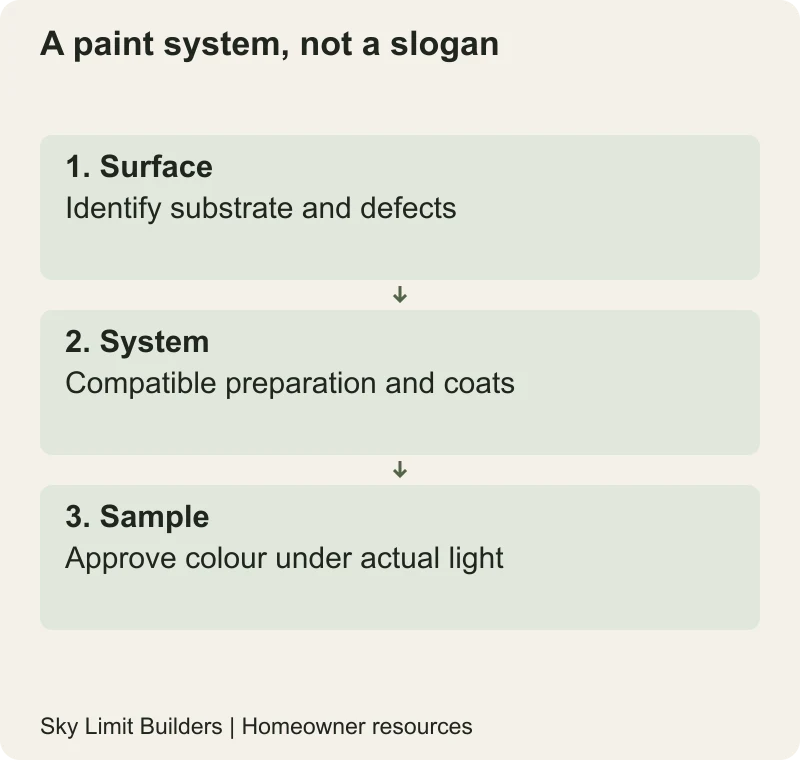
Select a paint system for the surface and exposure first, then compare the exact products offered by different brands. A washable interior finish, an exterior coating, a metal primer and a masonry sealer solve different problems. This guide does not claim an independently tested “best” Pakistani paint brand; it helps you compare proposals without overlooking dampness, preparation and maintenance.
Describe the job before visiting a dealer
Make a room-by-room list of substrates: new plaster, old painted masonry, timber or metal. Record whether each surface is indoors, exposed to weather, frequently cleaned or affected by a leak. Photograph existing defects. A painter cannot reliably price preparation from a colour name and total floor area alone.
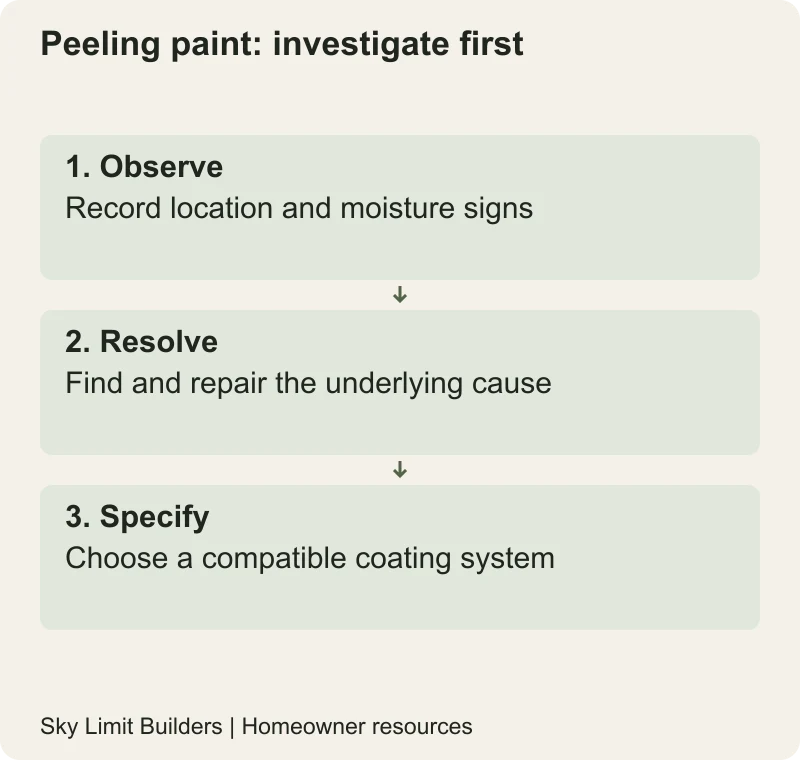
If paint is peeling near a roof, plumbing route or ground-level wall, investigate the moisture source before choosing a new finish. The waterproofing guide explains how to organise that investigation. A decorative coating should not be sold as a repair for an unidentified leak.
Ask for the whole system, not just the top coat
Request the manufacturer’s technical data sheet (TDS) for each proposed product. It should guide suitability, preparation, compatibility, application and drying conditions. A safety data sheet addresses handling hazards; it is not a substitute for the application instructions. Ask the painter to identify the primer or sealer, any filler, and finish coats as a compatible system.
For example, Nippon Paint Pakistan’s Quality Primer/Sealer data sheet calls for clean, dry surfaces and warns against painting while moisture and alkalinity remain high. Its product-specific instructions should not be turned into a universal rule for every paint. Obtain the current sheet for the actual product being quoted.
| Compare | Ask the contractor to record |
|---|---|
| Preparation | Removal, repairs, cleaning and how readiness will be checked |
| Products | Exact names, compatible layers and approved colour code |
| Quantity | Measured surface area and product-specific coverage assumptions |
| Labour | Access equipment, protection, drying periods and cleanup |
| Completion | Sample acceptance, touch-ups and leftover labelled material |
Approve a sample under actual lighting
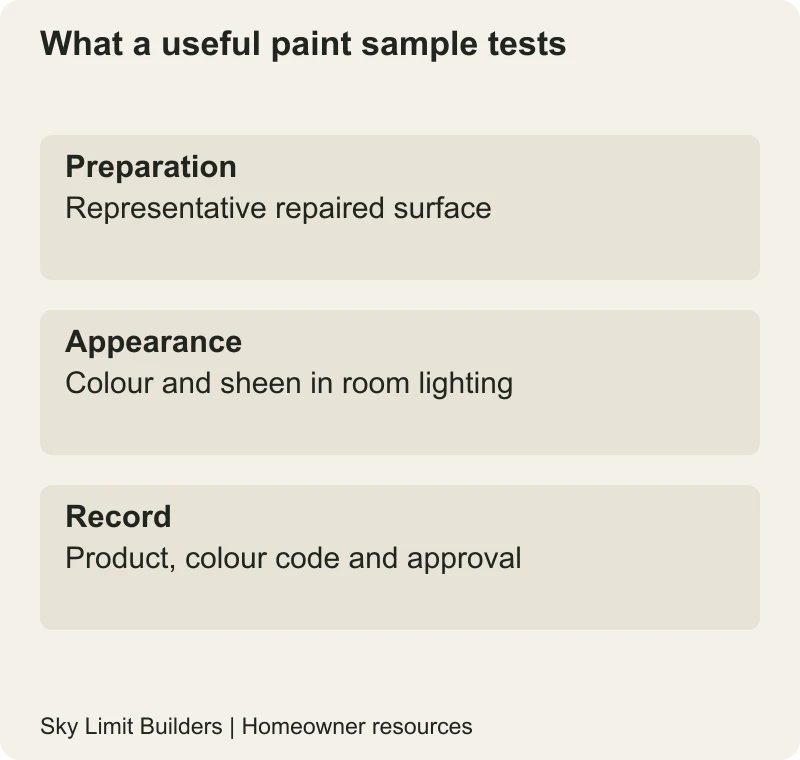
A phone screen and a shop colour card are useful starting points, not final acceptance samples. Ask for a representative sample panel using the proposed preparation and finish. View it in daylight and under the room’s intended lighting. Include a corner or repaired area if those are central to the job. Record the approved code and sheen so later touch-ups are not based on memory.
Choose sheen with cleaning needs and surface condition in mind. Do not assume a label such as “washable” gives unlimited resistance to harsh scrubbing. Ask for the manufacturer’s cleaning instructions and the time before normal cleaning can begin. For an occupied house, agree room closures, ventilation and safe storage before work starts, and follow the product safety instructions around children and other occupants.
Check delivery and the final result
Keep invoices and photograph product names, batch identification and sealed containers. Confirm how tinting is recorded. During handover, inspect coverage and repairs in normal room lighting, check that hardware and floors were protected, and list defects by room rather than writing “paint not good.” Do not judge the completed system while it is still wet or before its specified drying period.
For a Pakistani new-build schedule, painting must be coordinated with wet trades, exterior weather and remaining plumbing work. Use the construction timeline guide to plan that sequence. The next step is a written system proposal and a sample panel—not a longer list of brand slogans.
Safety note: coatings and surface preparation can involve hazardous substances and dust. Follow the current safety data sheets and use a competent contractor; this guide makes no medical or “non-toxic” product claims.