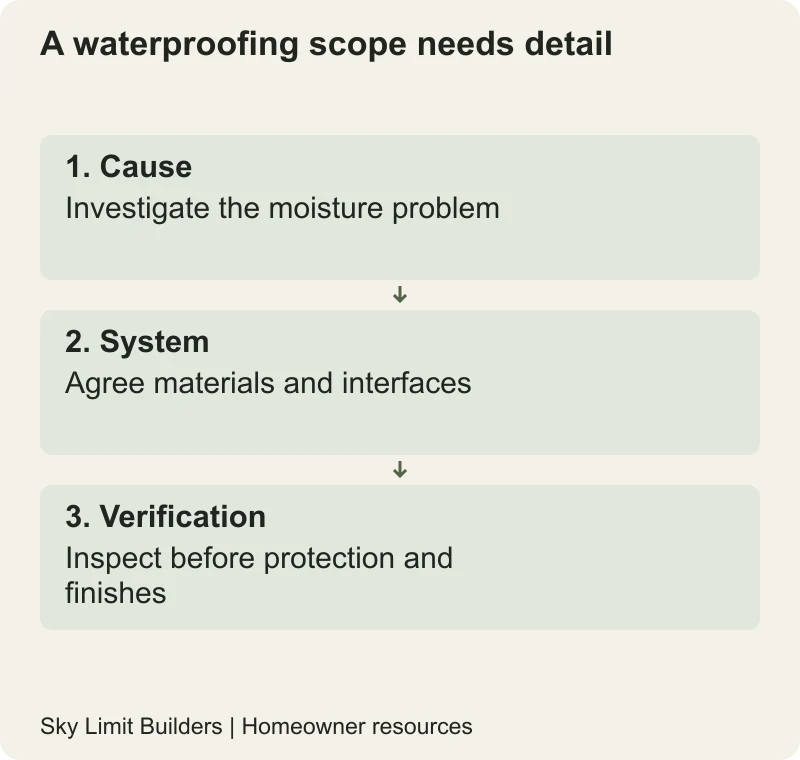
Waterproofing starts with identifying where water comes from and how the building is supposed to manage it. A damp patch may relate to rain, plumbing or another moisture source. Do not select a coating solely from the visible stain; establish the cause and the details that need repair before comparing products.
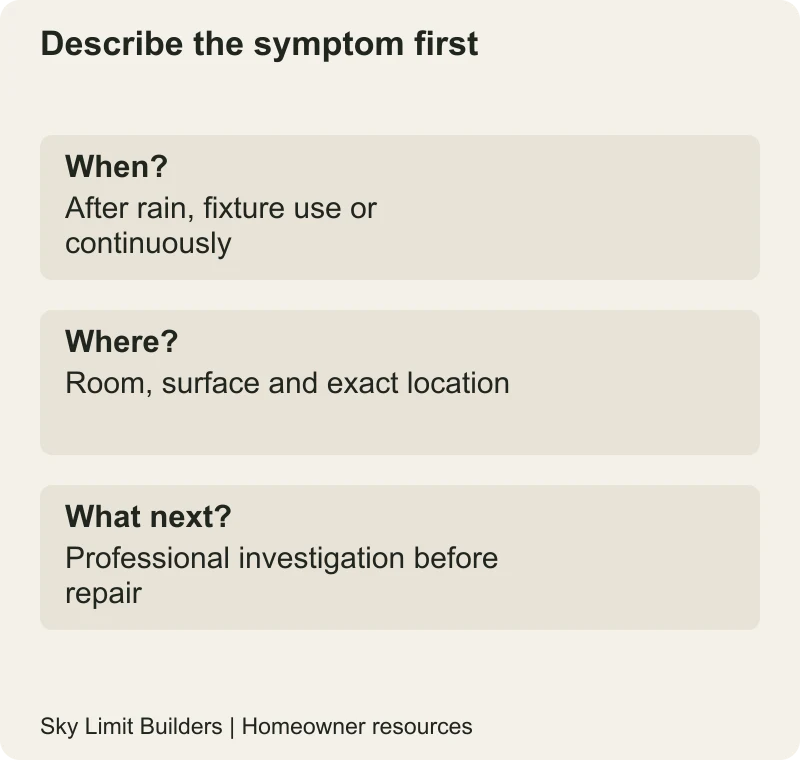
Record the pattern before prescribing a remedy
Note the location, when moisture appears and what was happening at the time. Does it follow rain, shower use or operation of a particular fixture? Take dated photographs from a safe location and retain any existing drawings. These observations help a qualified person investigate; they do not prove the cause by themselves.
Keep plumbing and waterproofing scopes distinct. A repaired pipe does not certify the surrounding membrane, and a new membrane does not repair a concealed leaking connection. Use the plumbing guide to plan access and testing responsibilities.
Approve a complete system
Ask for a proposal identifying the substrate, preparation, repair materials, waterproofing, junction treatments, protection and finish. The substrate is the surface receiving the system. A primer or sealant chosen independently may not be compatible with the membrane; obtain the manufacturer’s written system information and project-specific advice.
For example, Sika Pakistan’s SikaTop-107 Seal PK data sheet includes application limitations and finishing requirements. This illustrates why exact regional product documentation matters; it is not an endorsement or a recommendation that this product suits every roof, bathroom or basement. No manufacturer image has been reproduced here.
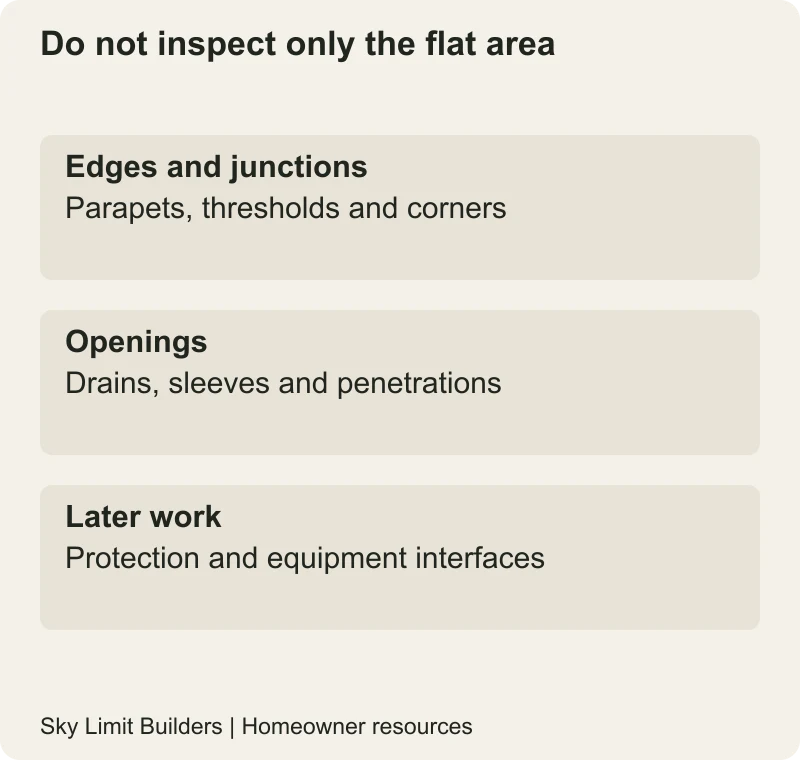
Review interfaces, not only the open surface
| Area | Questions for the designer and installer |
|---|---|
| Roof | How are outlets, parapets, joints and equipment penetrations detailed? |
| Bathroom | How do the system, drains, pipe penetrations and thresholds connect? |
| Balcony | How are the door interface, drainage and exposed edges resolved? |
| Below ground | What moisture conditions, protection and drainage strategy were designed for? |
Ask the installer to mark these locations on a drawing before pricing. “Two coats everywhere” does not explain how a drain connection or movement joint will work. Where a detail is missing, return it to the designer rather than leaving the tile installer to invent it.
Build inspection into the sequence
Agree when the substrate will be inspected, when details remain visible and when testing may take place. Follow the selected system’s instructions for preparation, application and waiting periods. Do not copy a test duration or water depth from a different product or project.
A flood test must be specified and safely planned, including loading, containment and drainage. It is not a homeowner experiment to carry out on an uncertain structure. Record the method, area, date, witness, observations and any repair or retest. Photograph critical details before protective layers hide them.
Assign responsibility for later damage
On a new Pakistani house, several trades may visit a roof after waterproofing: tank, solar, electrical and cooling installers. Put their routes and supports into the coordinated design. Ask who protects finished work and who authorizes any penetration. A warranty argument is harder to resolve when nobody recorded which trade altered the assembly.
If insulation or reflective treatments are also proposed, compare them through the roof heat-control guide. Thermal performance and resistance to water entry are different requirements and must be coordinated.
Keep a useful maintenance record
Collect product names, batch references where recorded, installation photographs, test results and warranty terms. Ask the installer what inspections and maintenance the completed system needs and how future work should be managed. Do not add an unknown coating over a problem and assume it preserves the existing warranty.
Before requesting a quote, prepare a short symptom record and the available construction information. Discuss that evidence with the project team, then ask for a documented scope that identifies the cause, treatment and verification. A useful repair is one whose purpose and acceptance criteria are clear.
Professional note: diagnosis, product suitability, below-ground design and testing require project-specific advice. The original diagrams show decisions and interfaces, not a prescribed membrane build-up.