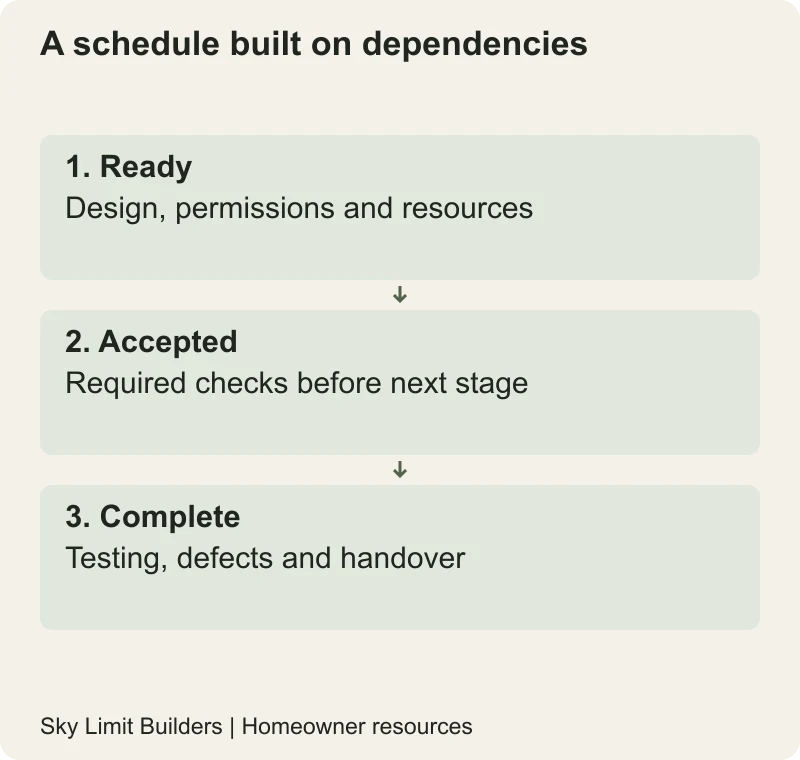
A useful construction timeline shows what must happen before the next activity can start, who makes each decision and which inspections cannot be skipped. A single promise of “six months” says little unless it is tied to your approved drawings, procurement plan, site constraints and contract scope. This guide therefore does not give a universal completion period for Pakistani houses.
Separate the programme into decisions and site work
Before mobilisation, track land and access readiness, investigation, design coordination, authority permissions, the budget and the contract. These are not decorative steps before the “real” schedule. If a required approval or structural detail is missing, a contractor may be unable to proceed even when labour is available.
Use the preconstruction planning guide to assemble the starting documents. Ask the contractor to state the assumptions behind the proposed start date, including owner-supplied items and decisions that have not yet been made.
Build milestones around accepted work
| Milestone | Dependency to discuss |
|---|---|
| Excavation starts | Permissions, setting out, safe access and excavation planning |
| Foundation work closes | Required inspections, tests and accepted concealed details |
| Structural cycle advances | Design, reinforcement/formwork checks and engineer-approved loading sequence |
| Finishes begin | Concealed-service tests, substrate readiness and agreed samples |
| Handover | Commissioning, defect review, documents and required authority steps |
A milestone should describe an observable outcome. “Plumbing complete” is ambiguous if it means only pipes installed, rather than tested and recorded before concealment. Define what the person certifying progress must see.
Do not compress technical waiting periods by guesswork
Concrete curing, loading decisions and product drying periods are not interchangeable waiting times. The NRMCA curing guidance explains curing as controlling moisture and temperature for concrete development. It is not a universal permission to remove props or load a slab on a particular day. Obtain those decisions from the engineer and use product instructions for finishes.
Plan weather-sensitive work using the actual location and season. Multan heat, rainfall exposure, access conditions and labour availability should be discussed explicitly, but no calendar month guarantees trouble-free construction. Identify protection, working arrangements and the response when conditions fall outside the approved method.
Keep a short look-ahead schedule
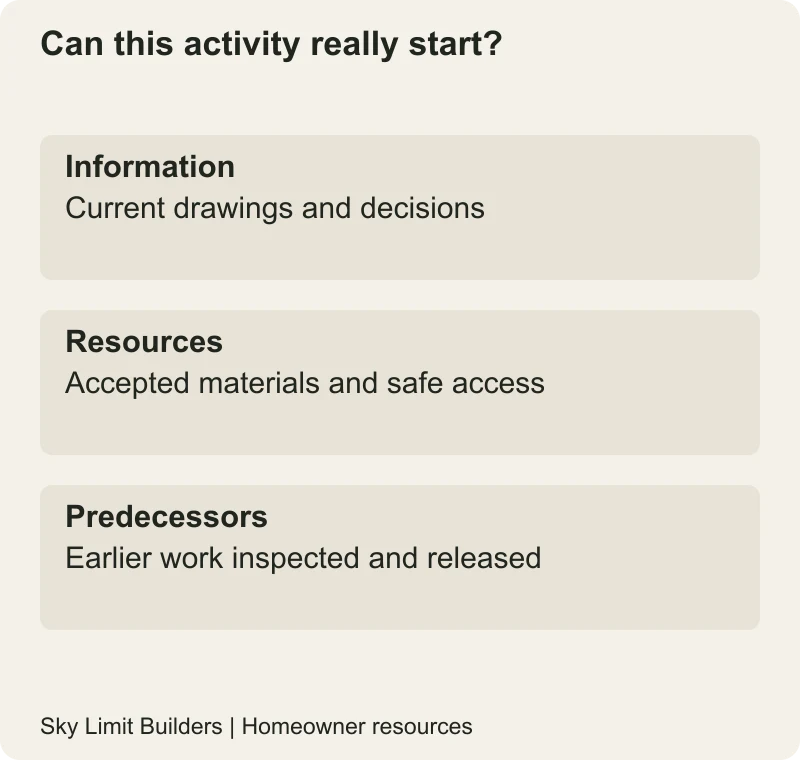
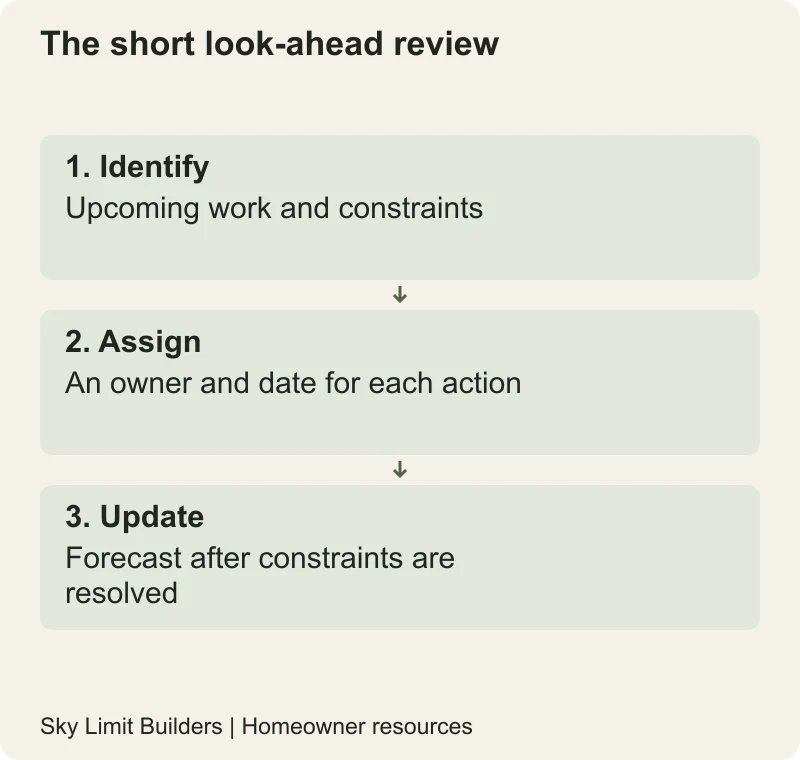
At each progress meeting, review the next few work fronts and ask: are drawings available, materials accepted, predecessors complete and inspections booked? Assign an owner decision date to long-lead items such as windows, kitchen units or specialist equipment. Confirm lead times with the actual supplier instead of copying a generic allowance from a previous job.
Illustrative example: tiles are due for installation, but the wet-area test is unresolved and the drain detail is changing. Report both dependencies; do not mark tiling “ready” merely because cartons have arrived. The programme should reveal the problem early enough to move another appropriate activity forward.
Update the forecast without erasing the original promise
Keep the agreed baseline programme and compare actual progress with it. Record delay causes, affected activities, proposed recovery and any cost or time claim separately. More workers are not always a safe recovery plan if the work area is congested or a design answer is missing. Changes to completion obligations should follow the contract’s written procedure.
Before moving in, allow time for the handover checks, instructions and defect closure. Ask for a schedule that identifies these tasks rather than treating the final coat of paint as completion. A credible forecast explains its assumptions and risks; it does not guarantee that nothing will change.