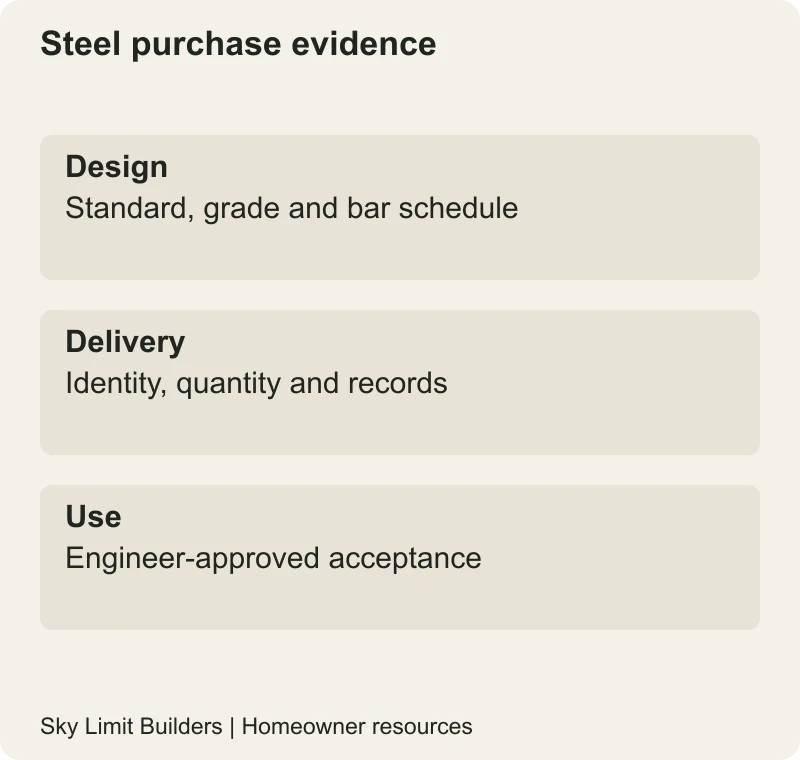
Buy reinforcement against the engineer’s specification and an identifiable supply chain, not a brand league table. A steel bar’s standard, grade, diameter and test documentation must match the approved design. A higher advertised strength is not permission to reduce the number of bars or substitute one product for another.
Understand the purchase description
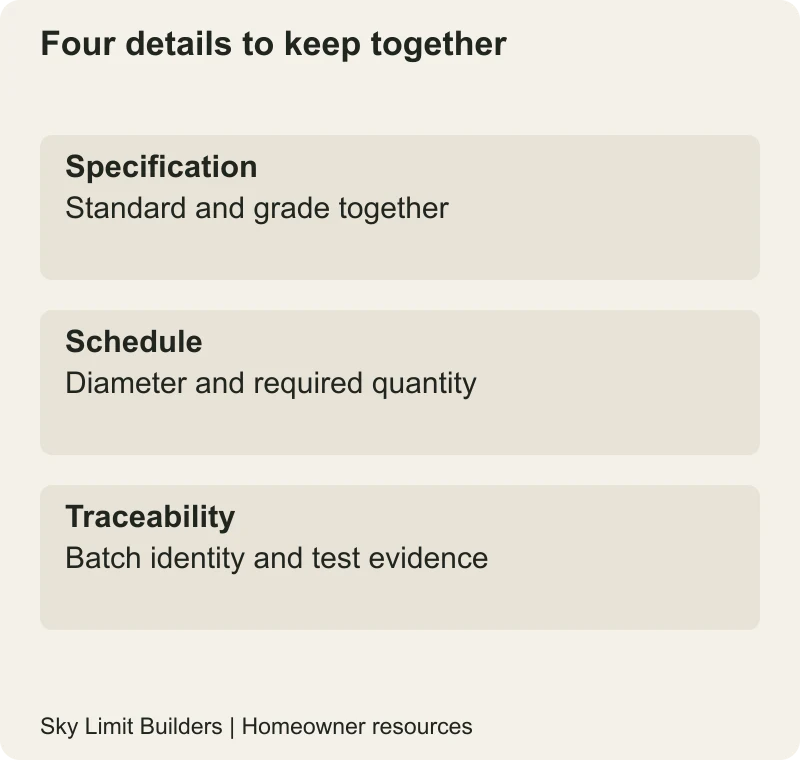
The standard describes a product’s requirements; the grade is only part of that description. Ask your engineer to write both, together with diameters, quantities and any restrictions on fabrication or welding. “Grade 60 steel” on its own may leave important requirements unresolved. The ASTM steel standards catalogue illustrates why separate specifications exist for different steel products and applications.
Amreli Steels’ buyer guide distinguishes standards from grades and discusses manufacturer markings and delivery weight checks. It is a manufacturer’s guide, not an independent comparison of Pakistani brands. Use it to frame supplier questions, not to replace the project’s acceptance specification or to attempt informal bend demonstrations.
Ask each supplier the same questions
- Can you supply the exact approved standard and grade in every required diameter?
- What mill documentation will accompany the delivery, and how does it identify the supplied batch?
- Who is responsible for transport, unloading, weighing and damage before acceptance?
- Can batches remain separated and identifiable if deliveries are split?
- What is the procedure if documentation or project testing does not support acceptance?
Record the quotation date, its validity, the unit of sale and any taxes or delivery charges. Do not compare a price per tonne with a price per piece without a documented quantity basis. For Multan deliveries, confirm the actual plot access and unloading arrangement; a roadside delivery can leave the owner with handling costs and safety responsibilities that were never discussed.
Set up a receiving hold point
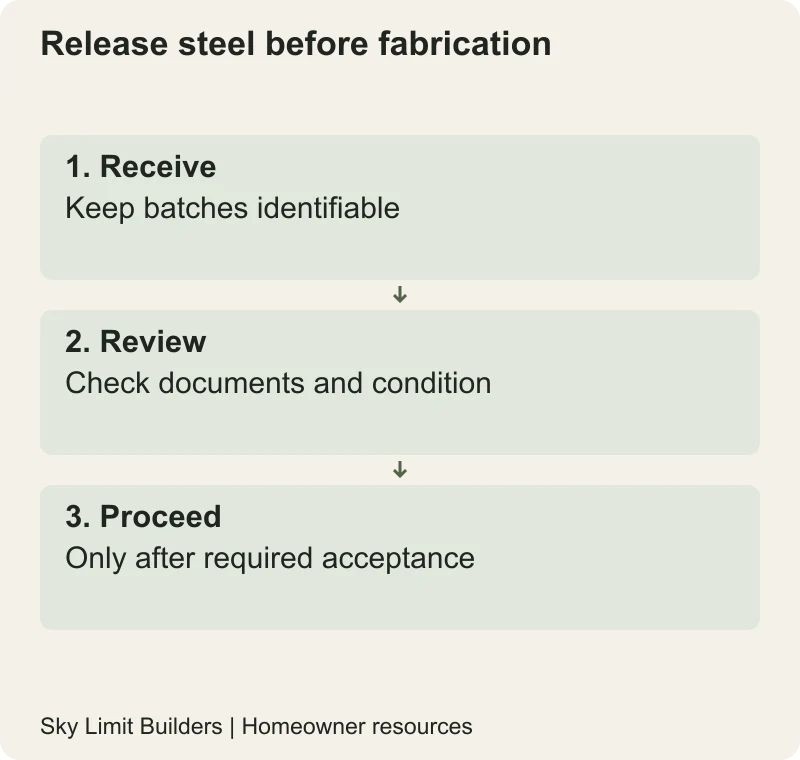
Before reinforcement is cut or fixed, the supervisor should compare the delivery against the approved schedule and retain identification, invoices and test records. A hold point means work waits until the designated person has reviewed the required evidence. It is easier to isolate an uncertain delivery while it remains in a labelled stack than after several batches have been mixed together in a slab.
Ask the engineer to assess corrosion, contamination, damaged bars or missing traceability. Do not apply a blanket “any visible rust means reject” rule, and do not assume that wiping a bar clean establishes acceptability. The condition, dimensions and specified requirements matter. Store and handle reinforcement under the contractor’s approved method, with safe access and protection from contamination.
Do not redesign the reinforcement on site
The bar-bending schedule translates the design into lengths and shapes for fabrication. Disagreement between it and a drawing requires clarification, not a guess by the purchaser. Changes to grade, diameter, spacing, laps, anchorage, welding or couplers require the responsible designer’s approval. An attractive steel price is not a reason to accept a verbal redesign.
For example, if a supplier offers an available diameter instead of the specified one, record the proposal and pause that purchase line. Let the engineer assess the change and issue revised documentation if appropriate. This is an illustrative purchasing scenario, not a substitution rule.
Keep the evidence through handover
File the approved specification, receiving records, testing decisions and inspection releases alongside the drawings. Use the quality checklist to agree who signs before concrete covers the reinforcement. Read the contract checklist if purchasing and testing responsibilities are unclear.
This article offers procurement questions, not reinforcement design or a certification of any brand. A qualified structural engineer must approve the material and its use on your project.