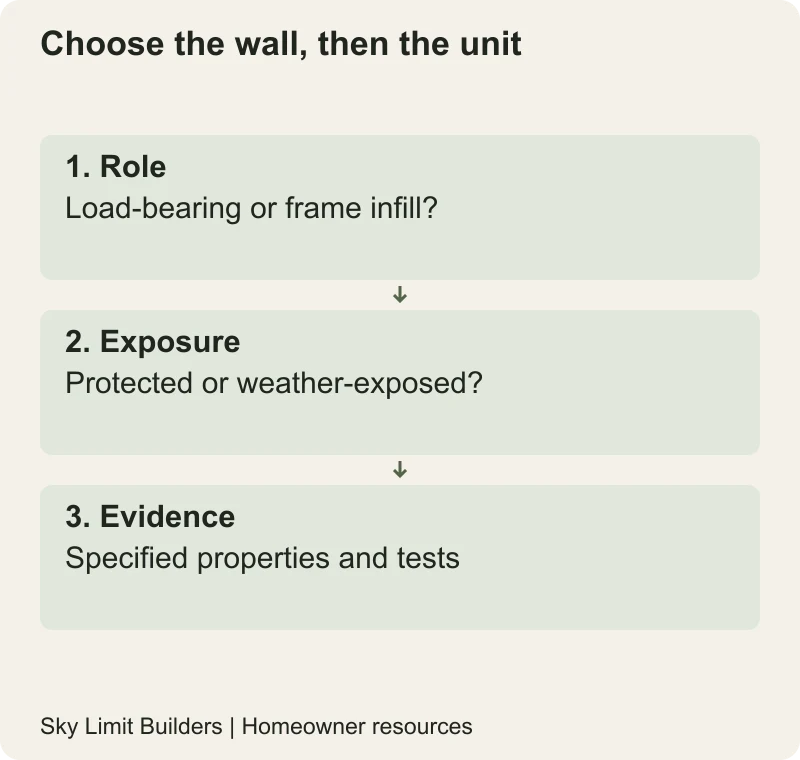
Choose masonry for the wall it must form, not simply for the brick colour or the cheapest delivered load. A load-bearing wall, a framed building’s infill wall and an exposed boundary wall have different design questions. The engineer’s specification, the supplier’s evidence and the receiving inspection should agree before a large order reaches your plot.
First identify what the supplier is selling
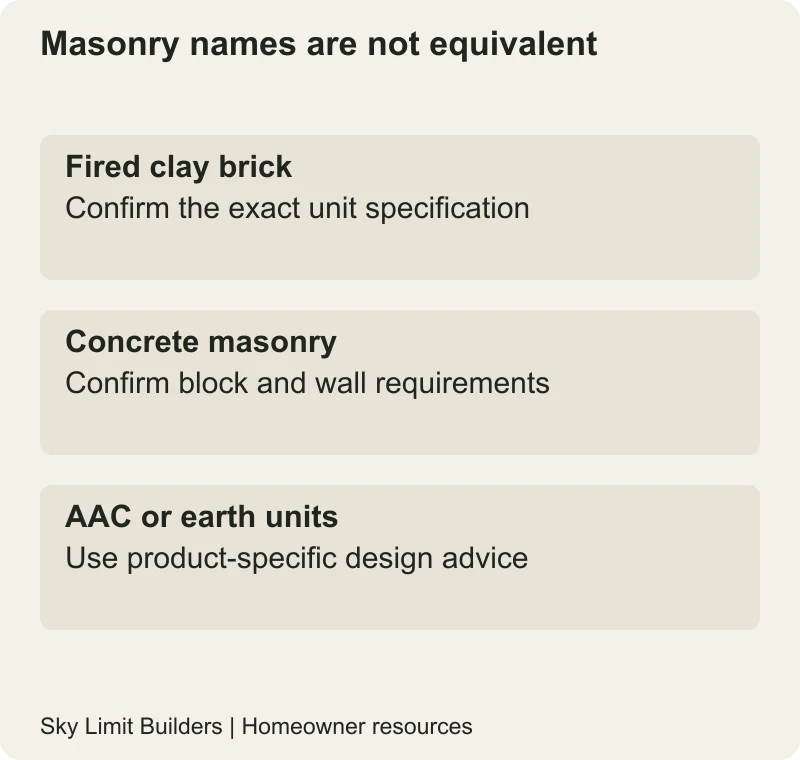
Fired clay brick, unfired earth units, concrete masonry blocks and autoclaved aerated concrete (AAC) are not interchangeable names for the same product. AAC is a manufactured aerated masonry product, not a pipe. regional trade descriptions can be imprecise: ask for the product name, dimensions, intended use and applicable specification in writing. Do not assume that a familiar regional nickname establishes strength or durability.
The Brick Industry Association’s technical-note index explicitly limits its guidance to fired clay and shale brick unless otherwise stated. That is an important boundary: advice about clay brick cannot automatically be transferred to concrete blocks or earth construction.
Compare complete wall systems
| Decision | Question for the designer or supplier |
|---|---|
| Structural role | Is the masonry carrying loads or filling a structural frame? Which unit and mortar properties are specified? |
| Weather exposure | Will the wall be rendered, exposed, below ground or repeatedly wetted? What protection and drainage are detailed? |
| Heat and sound | What is the performance of the whole wall, including thickness, finishes, insulation and openings? |
| Installation | Are compatible mortar, fixings, lintel details and trained installers available regionally? |
For a Multan house, compare roof and window heat control alongside the wall specification. An expensive masonry unit cannot compensate for an unshaded opening or an unresolved roof detail. Our hot-climate design guide puts these decisions in context. Avoid advertised room-temperature reductions unless the supplier explains the assembly, test conditions and limitations.
Ask for evidence before negotiating the quantity
Give shortlisted suppliers the same specification. Request recent reports for the exact product and ask the engineer whether the test method, sampling and results are suitable. Strength and water absorption are separate properties; neither a single universal percentage nor a home-grown impact test proves that a batch meets the project requirements. The acceptance limits should come from the specified standard and design, not from a blog.
- Keep an approved sample and record its dimensions and finish.
- Agree how delivered quantities, breakage and rejected material will be counted.
- Identify the production source and ask whether later deliveries will match it.
- Include transport, unloading, storage and replacement terms in the written price.
- Clarify whether mortar, plaster and installation costs change with the selected unit.
Inspect deliveries without pretending to run a laboratory
Compare a delivery with the approved sample and purchase order. Photograph the load, obvious damage and packaging or identification where present. Set aside mismatched or damaged units for review instead of mixing them into accepted stock. Appearance can identify a reason to investigate, but ringing sounds, colour and a dropped-brick demonstration do not replace specified laboratory tests.
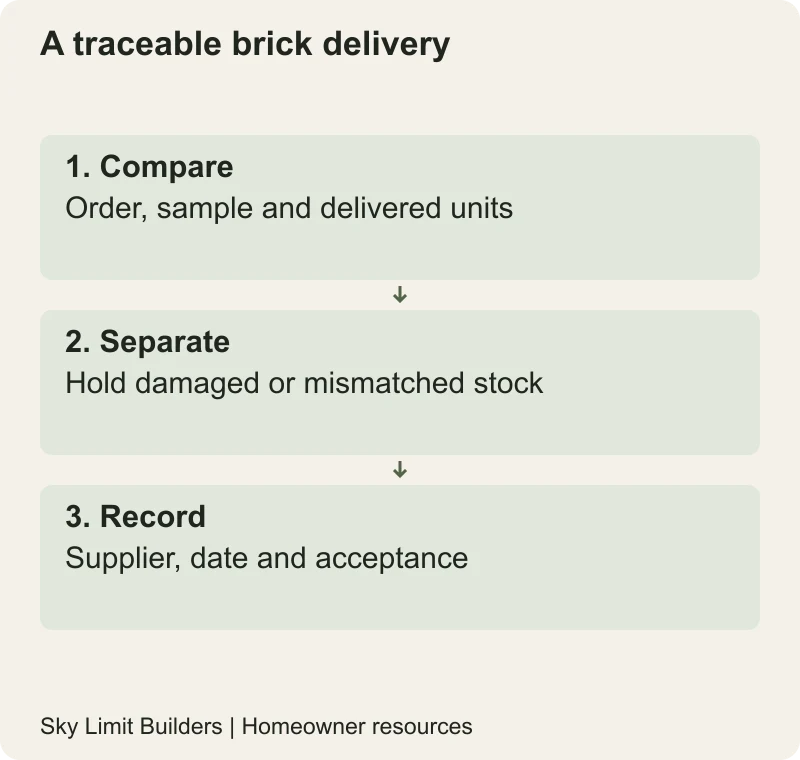
Ask the site supervisor to maintain a receiving log: date, supplier, quantity, inspection result, test reference if required, and where the batch was used. Keep material away from contamination and organise stacks so that workers can handle it safely. Installation, mortar preparation, joints and protection must follow the approved masonry details; selecting a recognisable brand alone does not establish workmanship quality.
Make the choice before the first wall starts
Have the designer approve the proposed unit and wall build-up, obtain comparable delivered quotations, and resolve any test requirements before ordering. If a substitute is offered during construction, obtain a written review of its structural, moisture, thermal and fixing implications. Use the stage inspection checklist to record acceptance, or send an enquiry with the specification you need priced.
Editorial correction: earlier versions confused masonry product names and gave unsupported acceptance thresholds. Those claims have been removed. This buying guide does not select structural masonry or replace a project engineer’s design.