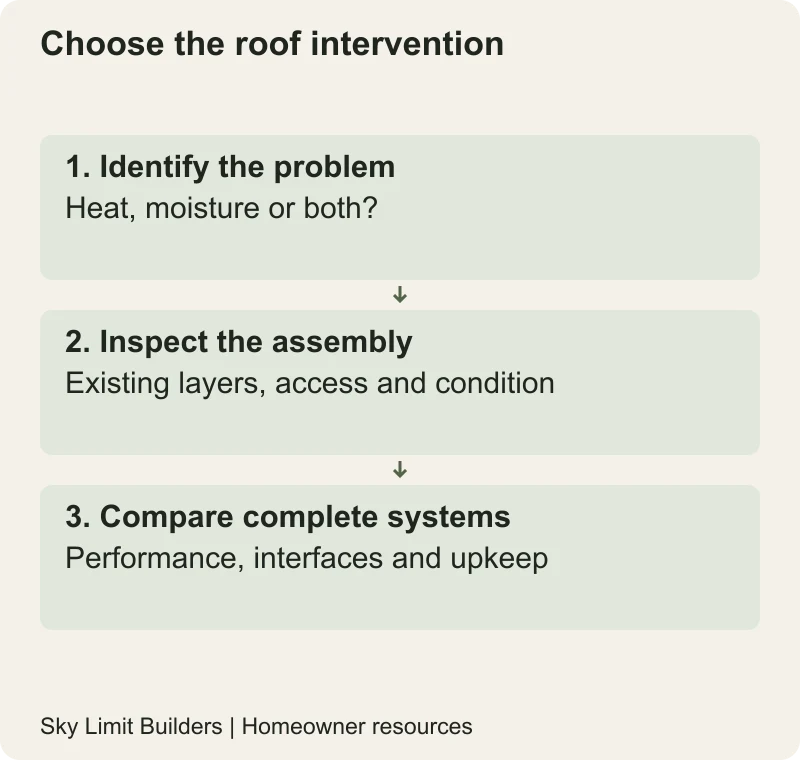
“Heatproofing” can mean a reflective coating, insulation or a shaded roof arrangement. These are different interventions, and none should be selected without checking the existing roof. Start by identifying whether your problem is heat entering the room, a leak, or both; then compare complete installed systems rather than a price per bucket.
Reflectance and insulation solve different problems
A reflective surface reduces the solar energy absorbed at the roof surface. Insulation resists heat passing through the roof assembly. The US Department of Energy’s Guidelines for Selecting Cool Roofs explains this distinction and why climate, existing insulation and roof properties affect the outcome. Its US cost examples and code assumptions are not Pakistani quotations or requirements.
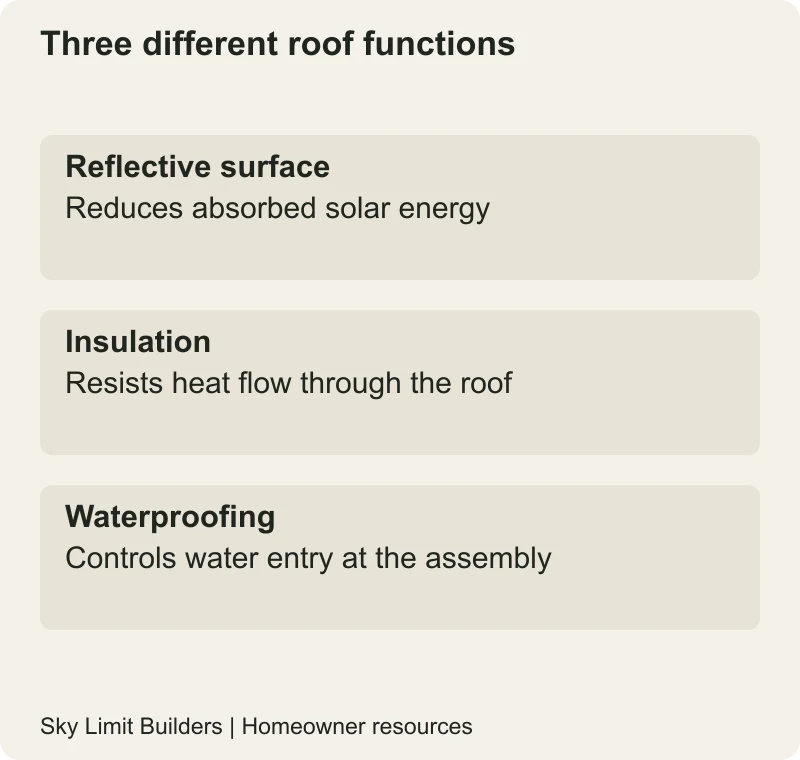
Do not accept a claim that a thin coating automatically provides the same resistance as a specified insulation layer. Ask the supplier which property is being measured, how it was tested and whether the value describes new or aged material. A roof-surface temperature reading is not the same as a verified reduction in room temperature or electricity use.
Inspect before adding another layer
Ask a competent professional to identify the existing build-up, drainage, defects and condition of waterproofing. Record roof access, tanks, solar equipment and all penetrations. If the layers cannot be established from drawings, ask what investigation is necessary rather than assuming a coating is compatible.
For a occupied house in Multan, plan where equipment and materials can be stored and how work will be scheduled around the household. Give special attention to areas that become inaccessible after new layers are installed. Any additional weight, raised level or equipment support needs the appropriate design check; it is not covered by a product’s thermal claim.
Compare options with the same questions
| Option | Evidence to request |
|---|---|
| Reflective finish | Measured reflectance, substrate compatibility, preparation and maintenance requirements |
| Insulation system | Thermal performance, fire and moisture suitability, complete build-up and protected interfaces |
| Shading or secondary roof | Structural support, wind design, access and effect on existing drainage |
| Combined upgrade | One coordinated detail and clear responsibility for interfaces and warranty |
Ask for product technical data and a project-specific installation proposal. Compare who prepares the substrate, repairs defects, treats parapets and penetrations, protects the completed work and returns if a fault appears. A low material-only price is not comparable with a complete installed system.
Do not bury an unresolved leak
If there is staining indoors, record its location and when it occurs. Have the cause investigated before covering the roof. The waterproofing guide helps separate diagnosis, system selection and testing responsibilities. Do not commission an improvised flood test on a roof without professional approval of the method and loading.
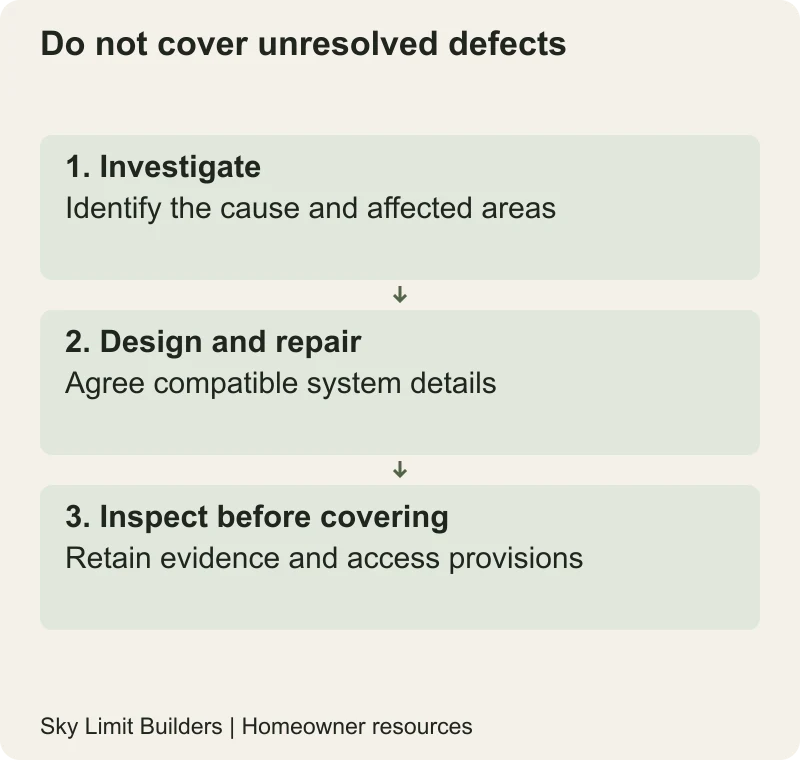
The designer should explain how the proposed assembly handles moisture and how the chosen insulation is protected in service. Material sold under the same generic name may have different specifications. Request the exact product rather than approving only a verbal description such as “foam board”.
Make savings claims testable
No fixed percentage saving is promised here. Your result depends on the building, occupancy, equipment and operating patterns. Before work, record the rooms affected, thermostat practices and the period used for comparison. If you later compare bills, acknowledge changes in weather, tariffs, occupancy and appliance use rather than assigning the entire difference to the roof.
As an illustrative decision, a homeowner with both an aging waterproofing system and overheating should request a coordinated renewal proposal before paying for a stand-alone cosmetic coating. Another owner with sound waterproofing may have a different set of options. Neither example specifies a universal layer arrangement.
Finish with maintenance instructions
Collect installation records, product names, warranty exclusions and safe inspection instructions. Agree who may fix future solar supports or service equipment without damaging the roof system. Keep outlets accessible and arrange professional attention to damage instead of repeatedly adding unidentified coatings.
Before requesting a quotation, prepare photographs taken from a safe location, available roof drawings and a description of the heat or moisture problem. Read the Multan climate-design guide for decisions beyond the roof, or discuss the scope with Sky Limit Builders.
Professional note: thermal, fire, condensation and structural suitability must be assessed for the actual assembly. Illustrations explain functions and decisions; they do not prescribe an installation detail.