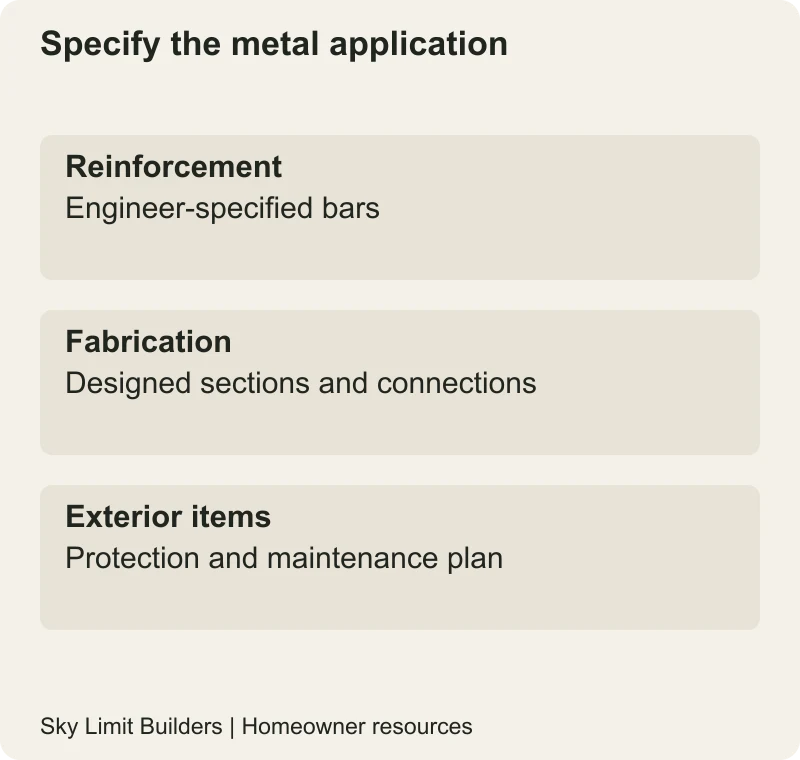
“Iron” and “steel” are often used loosely in construction conversations, but the purchase specification needs to identify the actual product. Reinforcement bars, fabricated gates, structural sections and cast components serve different purposes. Asking which metal is “best for construction” without naming the application can lead to a misleading comparison.
Correct the terminology first
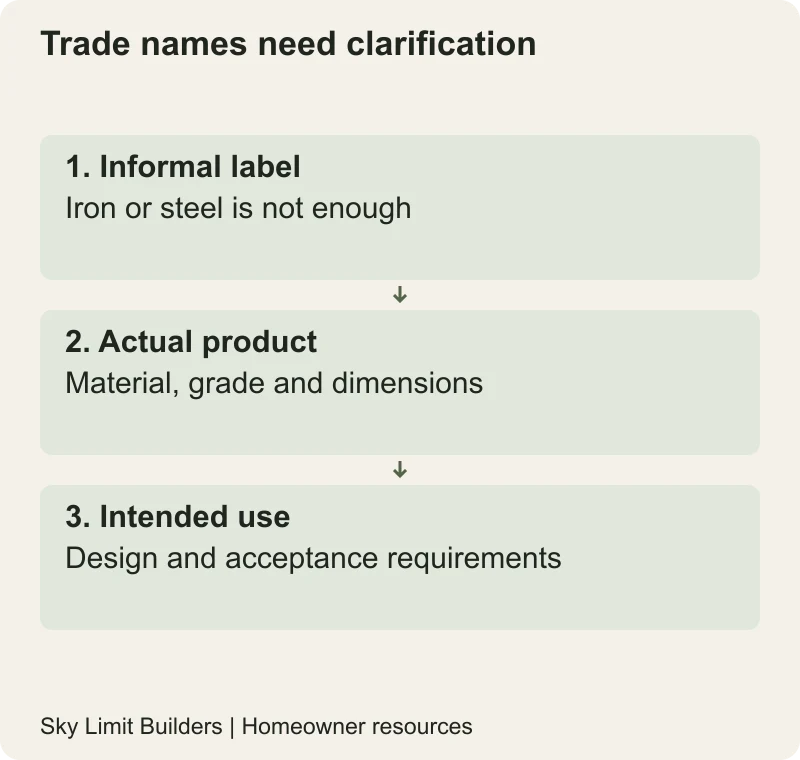
The World Steel Association explains steel as an alloy based on iron and carbon. Mild steel is therefore steel, not a separate material called “mild iron.” Different steel products and grades have different properties; the word steel alone does not specify strength, weldability or corrosion performance.
Ask the supplier to replace an informal description with a written material specification, dimensions, finish and intended use. For a gate, this may involve the fabricated sections and protective system. For concrete reinforcement, it requires the engineer’s bar specification. The same sales phrase cannot serve both jobs.
Compare by application
| Application | Decision to resolve |
|---|---|
| Concrete reinforcement | Engineer-specified standard, grade, diameter and acceptance evidence |
| Structural fabrication | Designed sections, connections, fabrication requirements and protection |
| Gate or railing | Loads, fixings, safe operation, corrosion protection and maintenance |
| Existing or heritage component | Identify the original material and obtain a suitable repair assessment |
The ASTM steel standards catalogue shows that steel is covered by many product-specific standards. A supplier should identify the relevant specification, not merely say that all steel meets one general quality level.
Do not assume steel is automatically rust-resistant
Ask the designer or fabricator to specify protection for the actual exposure and maintenance conditions. Carbon steel, stainless products, galvanised products and painted fabrications should not be treated as equivalent. The protective treatment, preparation, joints and damage during installation all need an appropriate specification.
For an exterior gate in Multan, request a proposal that covers fabrication, fixings, finishing, site damage repair and future maintenance. Ask how water traps and inaccessible surfaces will be addressed. These are questions for the responsible designer, not a coating recipe or a promise of a maintenance-free gate.
Assess the complete cost
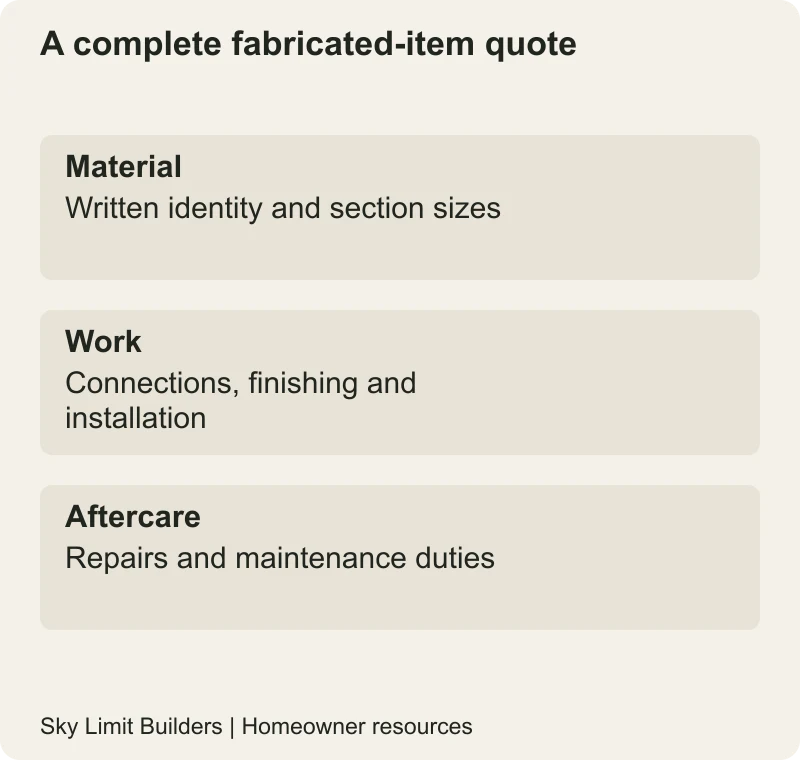
A material-only price can omit fabrication, connections, transport, lifting, finishing and maintenance. Ask competing suppliers to price the same dimensions and performance requirements. Keep approvals for changes and do not accept thinner or differently specified sections merely because they look similar once painted.
For reinforcement, follow the steel procurement guide. For boundary and entrance work, use the gate planning checklist. Those applications need different acceptance evidence.
Turn an unclear quotation into an answerable question
If an offer says “best iron gate,” ask the fabricator to name the material, section sizes, connection approach, finishing system and included installation. Have the relevant professional assess structural and operating safety. Once those details are agreed, price comparison becomes meaningful.
Editorial correction: the earlier article incorrectly contrasted mild steel with steel and made blanket corrosion and climate-resilience claims. Those claims have been removed. Material selection and fabrication design require competent project-specific advice.