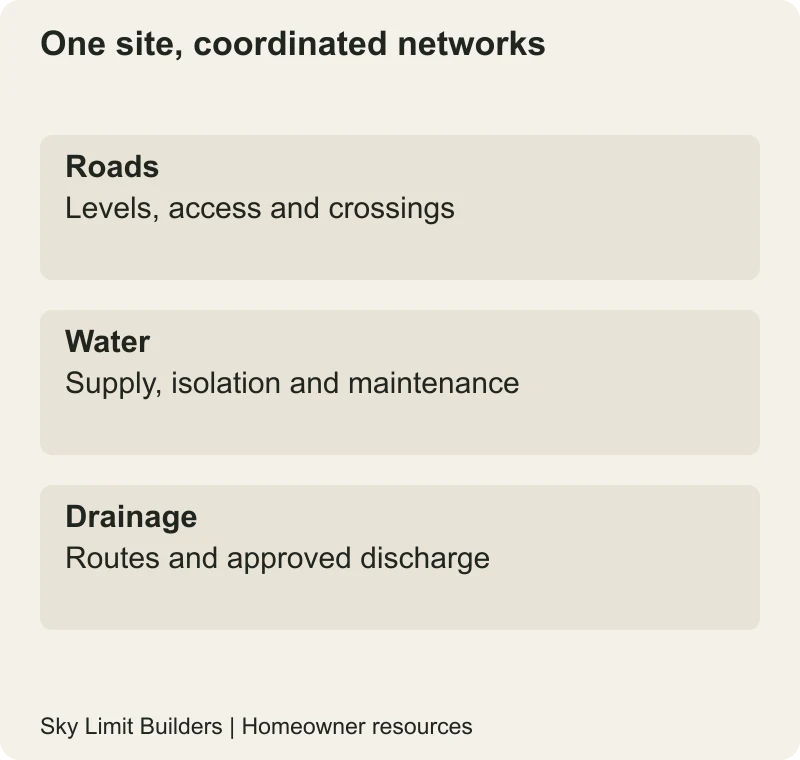
Roads, water networks and drainage should be coordinated before construction, because a finished road can conceal unresolved pipe routes, inaccessible valves or conflicting levels. For a housing development, practical sustainability means planning an asset that can be operated, repaired and maintained—not adding a green label to separate contracts.
Create one coordinated information set
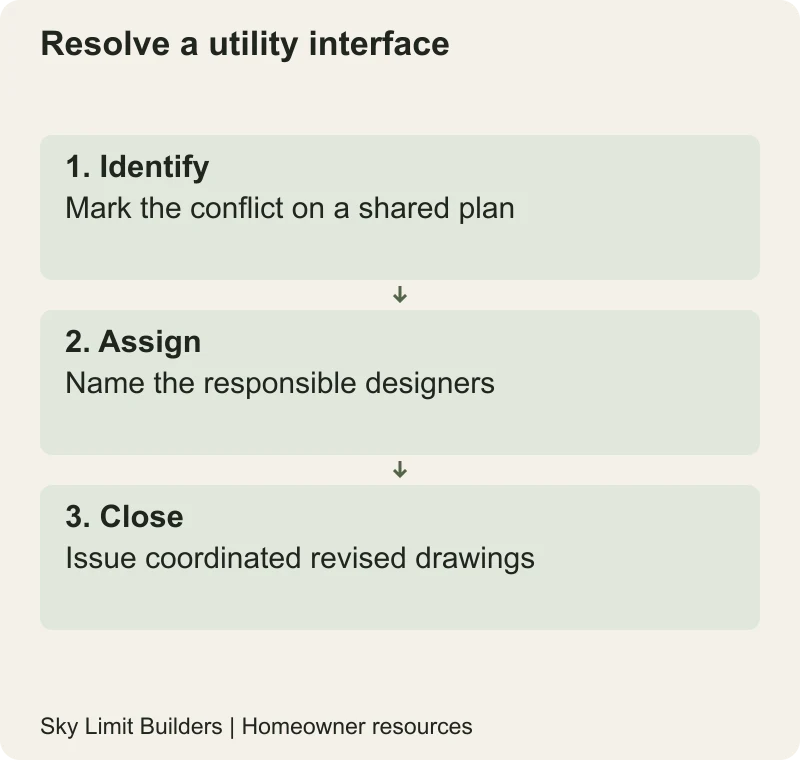
Ask the project team to place roads, water lines, sewers, surface drainage and other utilities on a common surveyed base. Each designer should identify the current drawing revision, interfaces and assumptions. A meeting where everyone has a different site plan cannot reliably resolve a crossing.
The owner should appoint someone to maintain the coordination register. It need not be complicated: list the location, conflicting information, responsible designer, agreed action and due date. Keep unresolved items visible until the updated drawings are issued. Coordination is not permission for a coordinator to redesign specialist systems.
Review the interfaces that become expensive to change
- Road levels versus plot entrances, drainage inlets and finished building thresholds.
- Utility crossings and the access needed to install or replace them.
- Water-system access, isolation points and the route for maintenance equipment.
- Drainage discharge arrangements and the authority responsible for receiving flows.
- Power and controls needed by pumps or treatment equipment.
- Future connections that should be recorded before surfacing closes the corridor.
Do not publish or apply a universal pipe-separation distance from this list. The relevant utility, authority and engineers must specify clearances, protection and other safety requirements. The WHO guide to water safety in buildings is useful context for treating building water systems as a public-health responsibility, not merely a plumbing purchase.
Make the construction sequence explicit
In an illustrative development, the road contractor may want to finish surfacing while the water contractor is still waiting for an approved crossing detail. The right response is not to let one team guess. Record the dependency, obtain the specialist decision and revise the coordinated programme. Identify what work can safely continue elsewhere while the interface is resolved.
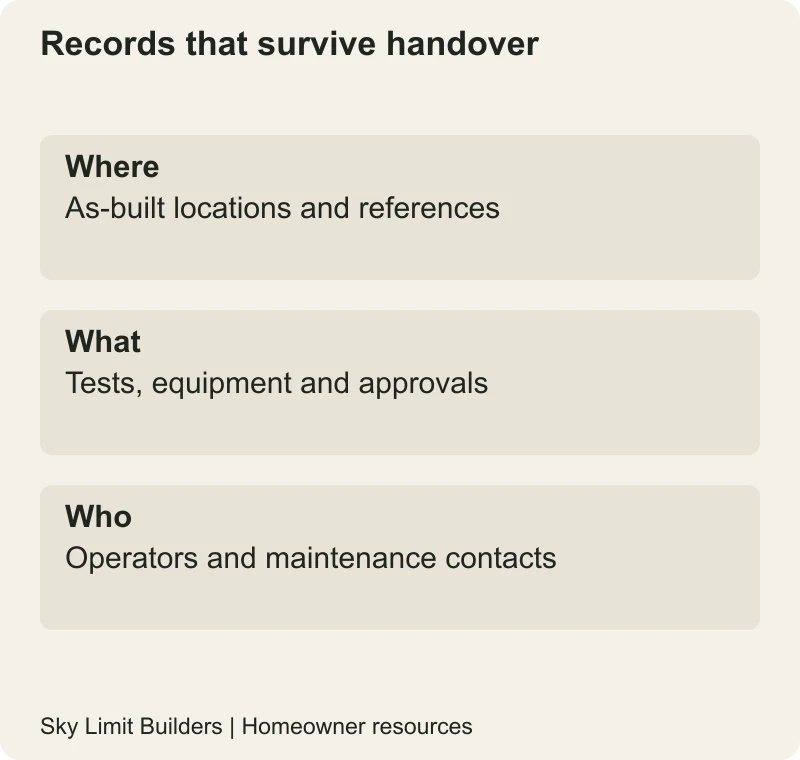
Ask the contractors to agree inspection windows before burying services. Record the accepted location and relevant test results in a form that can be found later. A folder of undated photographs without reference points is not a usable as-built record. See the road construction overview for layer and handover questions.
Budget for operation as well as installation
A capital-cost comparison should state who will run the system, how recurring costs will be funded and where spare parts or specialist support will come from. Ask for equipment access, isolation procedures, cleaning requirements and monitoring duties to be included in the handover. Avoid promising water or energy savings without a defined baseline, measurement method and operating assumptions.
For treatment equipment, use a source-water assessment and specialist design rather than choosing capacity from a sales brochure. Our water-treatment project brief sets out the information an owner should gather. Treatment, storage and distribution responsibilities must connect; responsibility should not disappear at a contract boundary.
A useful owner’s coordination meeting
Bring the current drawings, authority requirements, open interface register and construction programme. Finish with named actions: which drawing will change, who approves it, when it is needed and what work must wait. Before handover, repeat the exercise using as-built records and operating responsibilities. That produces a more useful outcome than a general pledge to build “sustainable infrastructure.”
This article is a coordination framework, not a claim of completed company infrastructure projects. Public-health, utility and civil-engineering decisions require the relevant qualified specialists and regional approvals.