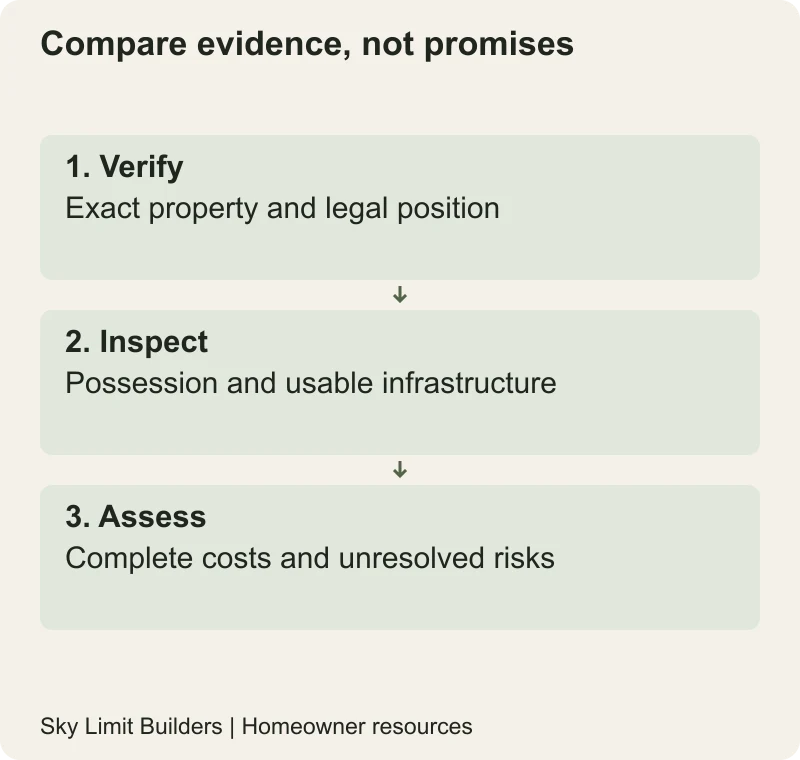
Compare a Multan housing-society purchase by its verified legal position, actual plot readiness, complete cost and suitability for your plans—not a promise of guaranteed appreciation. This article does not rank societies by return or recommend a particular investment. No transaction dataset has been supplied that would support those claims.
Begin with the exact property, not the society’s reputation
Record the society, phase, block, plot reference and what is actually being sold: a developed plot, an allotment interest or another contractual right. Ask a qualified property adviser to check ownership and transfer documents, encumbrances, charges and the seller’s authority. A society name alone does not answer those questions.
The official Multan district page identifies the Multan Development Authority. Confirm the competent authority for the specific scheme and seek its current records for the exact phase or extension. Do not treat this institutional page as evidence that a named society is approved. For Punjab land-record services, consult PLRA, with legal advice on how those records apply to the transaction.
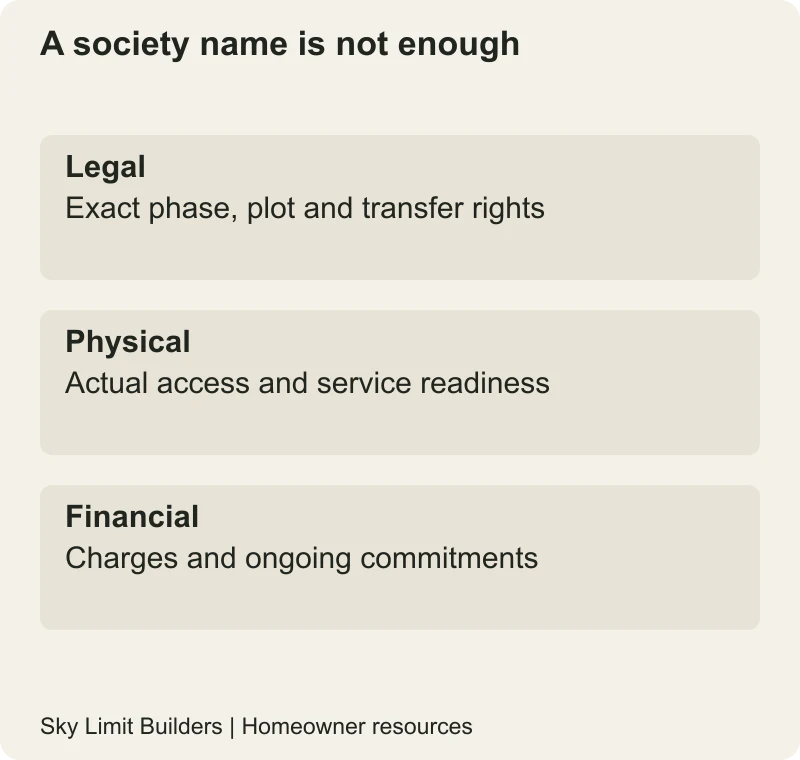
Inspect readiness for your intended use
- Can the plot be physically identified and lawfully possessed?
- Are access, road levels and drainage arrangements usable at the actual location?
- What evidence supports water, sewerage and electricity availability?
- Which building controls affect the house you want to construct?
- What construction access, material storage or working restrictions apply?
- Who will maintain shared infrastructure, and what charges are due?
Visit the location and ask for documents supporting promises about future services. Distinguish a installed network from a functioning connection to the specific plot. For a DHA Multan property, its official procedures are a starting point for transfer-related questions; still verify your individual case.
Compare the complete commitment
| Cost or risk | Evidence to obtain |
|---|---|
| Purchase and transfer | Written consideration and current applicable charges from responsible parties |
| Development obligations | Outstanding dues, instalments and any variable charges |
| Buildability | Plot-specific controls, investigation and realistic construction estimate |
| Holding period | Maintenance, financing and other recurring commitments |
| Exit | Transfer restrictions, likely selling costs and evidence of comparable completed transactions |
Advertised asking prices are not proof of completed sales. If comparing returns, ask a competent adviser to account for costs, timing and uncertainty. Do not rely on a fixed appreciation percentage, a “last chance” message or claims that a major road automatically guarantees demand.
Separate a family-home choice from speculation
For your own home, test travel routes, access to daily services, neighbourhood activity and whether the permitted layout suits your household. For an investment, assess how long you can hold the property without depending on a quick resale. These are different decision frameworks; the highest advertised return may not be the best place for your family to live.
Use the plot selection checklist and construction budget guide before committing funds intended for both land and a house.
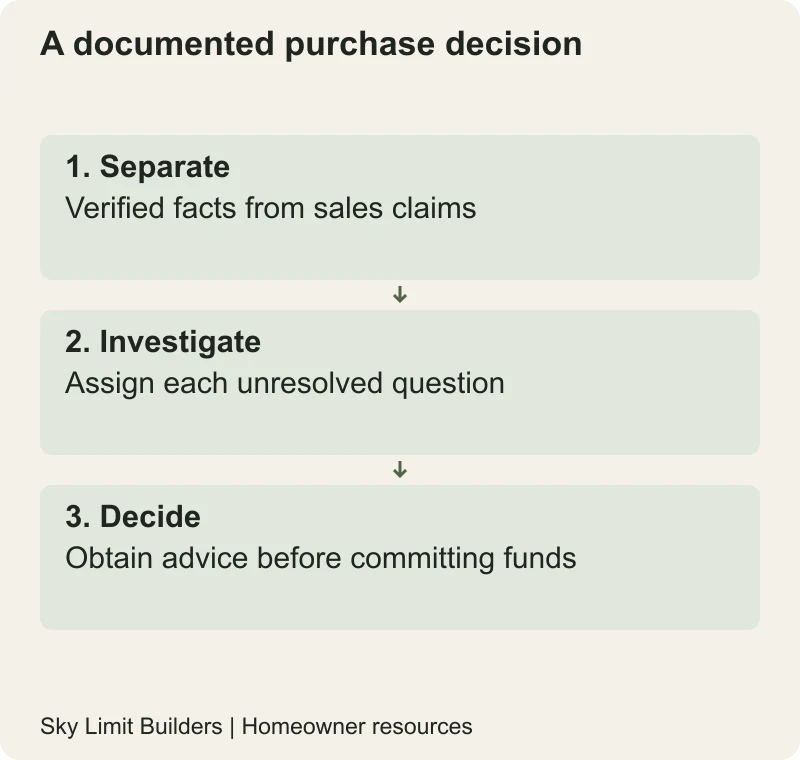
Make a documented go/no-go decision
List verified facts, unresolved questions and the professional responsible for each check. Do not convert a missing answer into an optimistic assumption. If legal status, payment liability or possession cannot be established, obtain advice before paying. This is a due-diligence framework, not personalised financial or legal advice, and Sky Limit Builders makes no return guarantee here.
Editorial correction: earlier society rankings, appreciation promises and unsupported company investment-history claims have been removed.