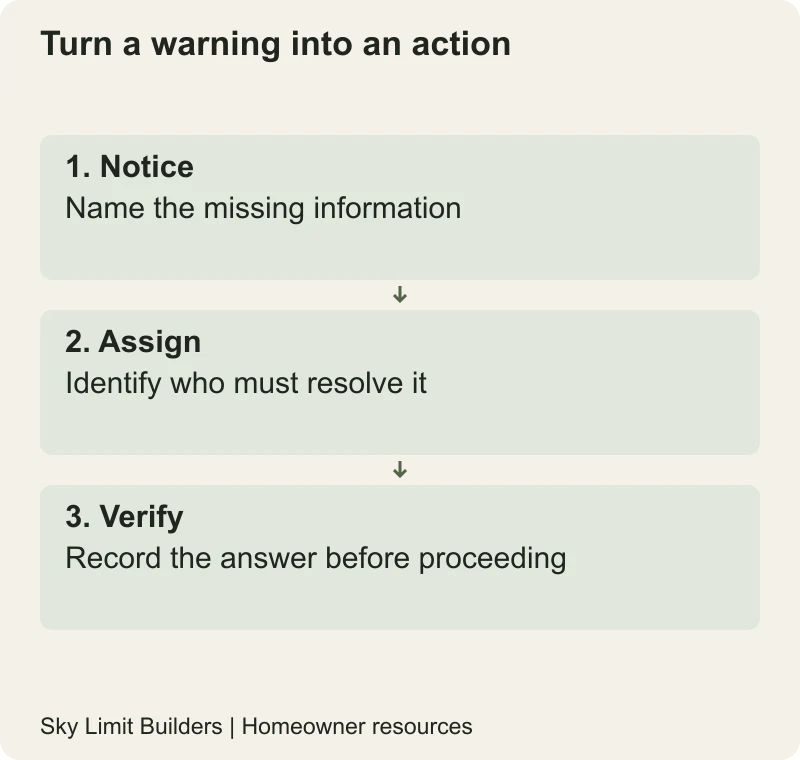
Construction mistakes are easier to prevent when the warning sign and the decision owner are explicit. Instead of treating every problem as “poor quality,” use the checks below to identify what is missing, what should pause and who needs to respond.
Starting work with unresolved information
Warning sign: the site has an architectural sketch but no coordinated structural details for the next stage. Response: ask the responsible designer for the required construction issue and clarify what can safely proceed. Do not accept “we will decide during the pour.” The drawing guide explains revision control and written queries.
A related mistake is treating approval as a universal certificate that all future workmanship is correct. For example, DHA Multan publishes separate building-control procedures and forms. Confirm the actual project’s required stages with the authority; do not assume a drawing approval removes later obligations.
Comparing unlike quotations
Warning sign: one “complete” price includes windows and fixtures while another carries unspecified allowances. Response: reconcile scope and quantities before ranking the totals. Write unresolved assumptions beside the price rather than hiding them in a verbal conversation. The grey structure versus turnkey comparison helps identify responsibility gaps.
Changing materials without a design check
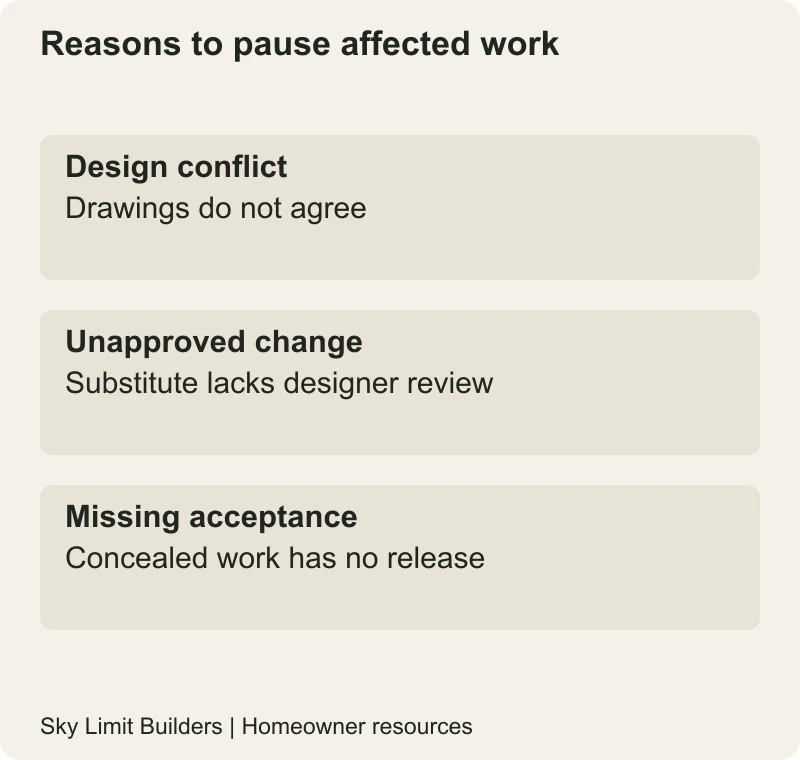
Warning sign: a supplier offers a different reinforcement grade, masonry unit or waterproofing system and work proceeds because it is available. Response: obtain the designer’s approval and document effects on interfaces, installation and cost. “Better brand” and “higher strength” do not establish that a substitute matches the design.
Covering work before it has been accepted
Warning sign: plastering or backfilling starts while concealed services or structural inspections remain undocumented. Response: use a hold-point register identifying the inspection, acceptance evidence and person releasing the next stage. Keep photographs referenced to the location and drawing. The quality checklist provides a stage-based record.
Leaving owner decisions until the last moment
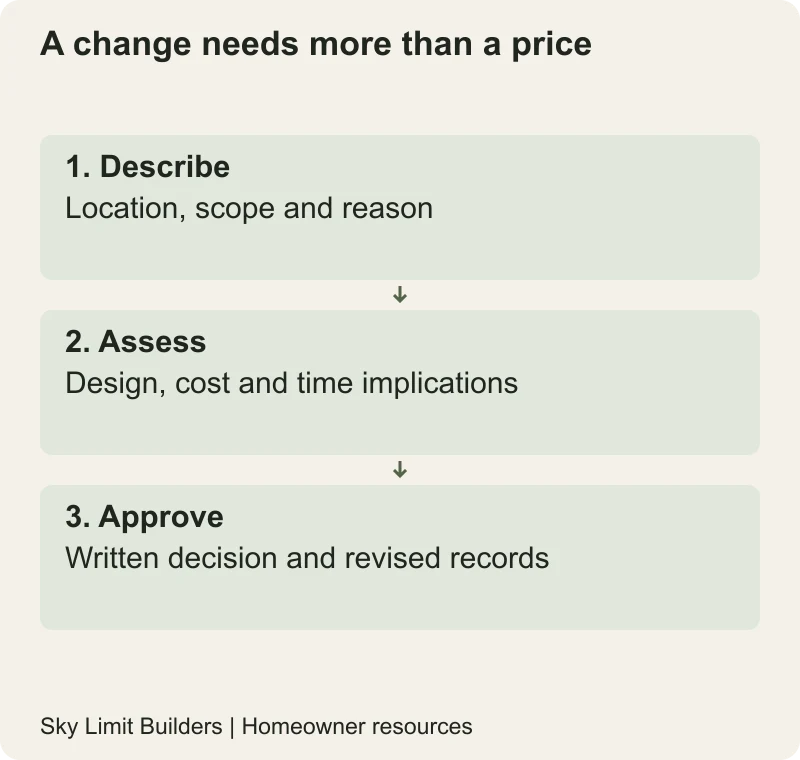
Appliance sizes, fixture positions, door swings and cabinet layouts can affect work well before finishing. Ask for a decision schedule showing when information is required, not merely when the item arrives. If an owner changes a selection, assess the affected drawings and programme before agreeing a price.
For example, a later kitchen island may need services in a floor that has already been finished. The solution is a coordinated redesign and cost decision, not uncontrolled chasing. This example illustrates a dependency; it is not a recommendation to place services in any particular slab.
Confusing speed with progress
A newly covered surface can hide incomplete checks. Ask the contractor to report accepted work, unresolved defects and upcoming constraints separately. Technical curing, testing and product-readiness requirements should not be shortened merely to meet a photo update. Keep the baseline programme and document changes to it.
Closing the job without records
Before final acceptance, reconcile variations and collect operating instructions, test evidence, approved changes and defect contacts. A payment receipt alone does not explain where a concealed valve is or which product was installed. Ask for a room-by-room defect list and agreed closure process.
Choose one practical control for your next meeting: a drawing register, a scope comparison or a concealed-work hold point. Assign a named person and follow up until it is closed. For unsafe conditions or suspected structural problems, keep people away and obtain qualified assistance; this checklist is not a site-safety procedure.