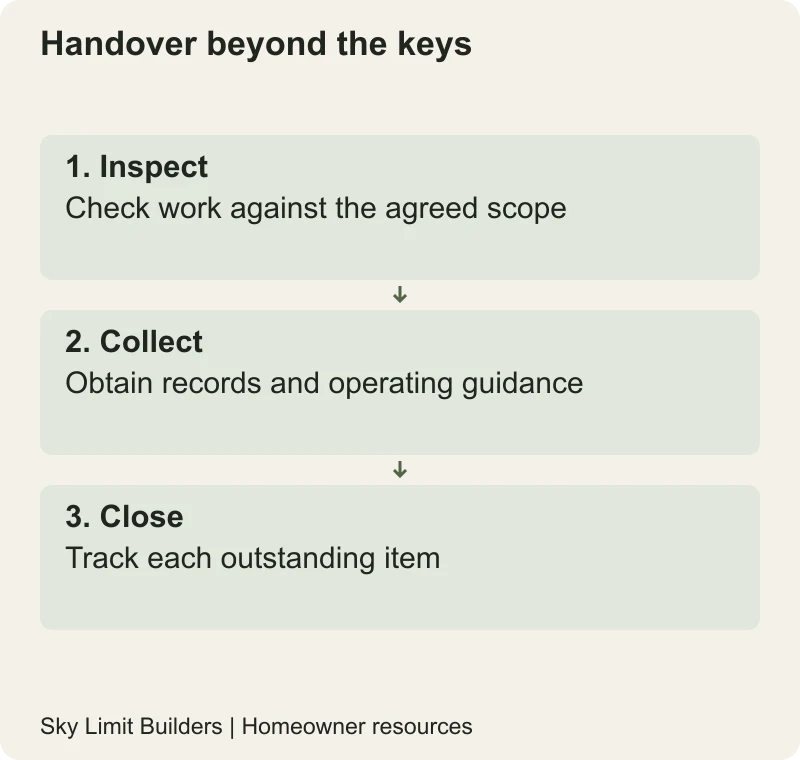
Receiving keys does not establish that every system has been tested or every contractual item has been delivered. Treat handover as three related tasks: inspect the finished work, collect the records and agree how outstanding items will be closed. Use one dated list so the homeowner and contractor are discussing the same defects.
Agree the scope of the inspection
Bring the contract, latest drawings, finish schedule and approved variations. If something was excluded from the contract, record it separately from a defect in included work. Book enough time for a daylight walk-through and demonstrations by the appropriate installers; an agent handing over keys cannot answer every technical question.
Do not confuse your contractual handover with an authority’s completion process. DHA Multan, for example, publishes building-control forms including a completion-certificate procedure. Confirm current requirements directly with your own approving authority. This article does not claim that taking possession or paying the final bill satisfies them.
Inspect room by room without unsafe testing
Start at the entrance and follow a consistent route. Operate ordinary doors, windows, drawers and locks; inspect finishes under normal light; note visible damp, damage and unfinished edges. Use room names and numbered photographs. A note saying “bathroom needs finishing” is less useful than identifying the exact fitting or junction.
- Check that supplied finishes and fittings match the agreed schedule.
- Ask installers to demonstrate equipment and explain its controls.
- Check that intended access panels and isolation points remain accessible.
- Inspect exterior areas only where safe access has been provided.
- Record missing items separately from damaged or poorly completed items.
Do not climb an unprotected roof, remove electrical covers, enter a tank or perform an improvised load test. A homeowner’s visual inspection cannot certify structural, electrical or water safety. Arrange specialist inspections where needed.
Collect evidence, not only demonstrations
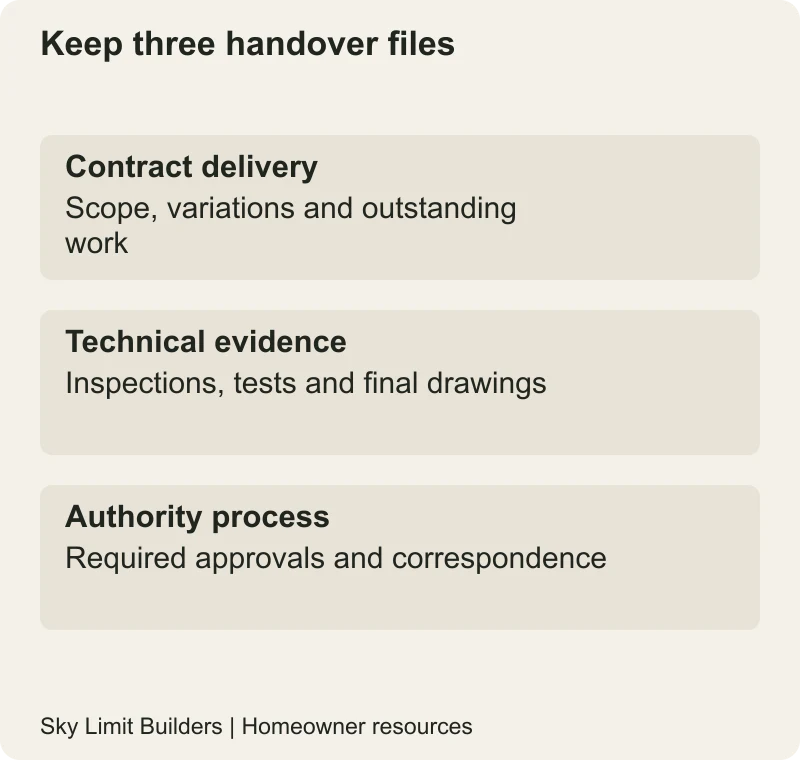
| Folder | Records to request where applicable |
|---|---|
| Approvals and design | Approved drawings, authority correspondence and final revisions |
| Construction quality | Inspection records, concrete results and concealed-work photographs |
| Services | Electrical and plumbing test records, commissioning details and final layouts |
| Products | Manuals, model numbers, warranty terms and service contacts |
| Commercial | Approved changes, account reconciliation and agreed outstanding obligations |
Ask who produced each record and which part of the house it covers. A test certificate from a different address or an unspecified circuit is not adequate evidence for your installation. The electrical guide and plumbing guide explain what to arrange before work is concealed.
Write defects so they can be closed
Each item should have an identifier, location, observation, photograph where useful, assigned person, target date and closure evidence. Separate an observed defect from a proposed diagnosis: “damp patch appeared after rainfall” is evidence; “the entire roof membrane has failed” needs investigation.
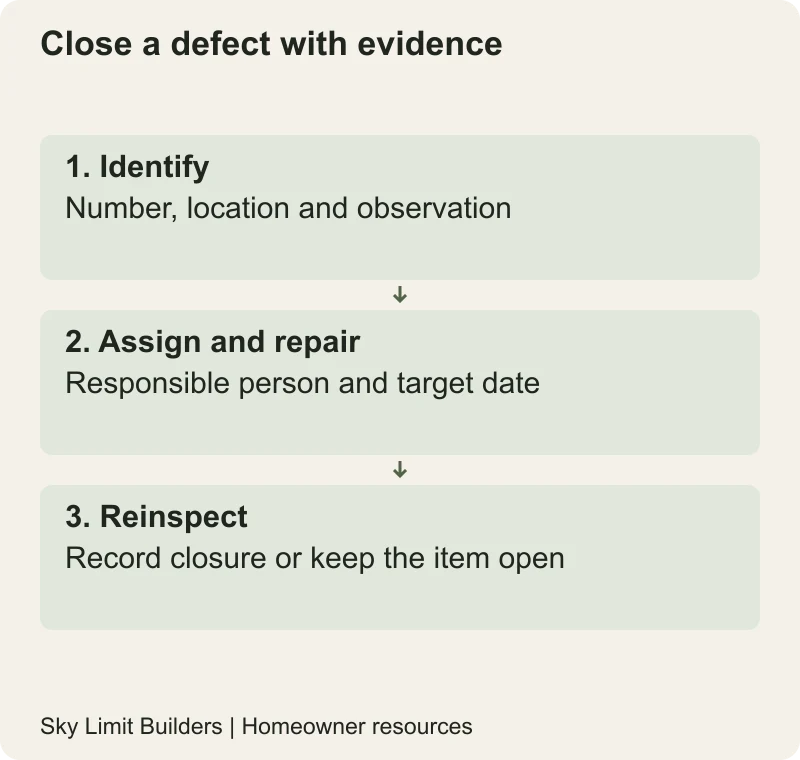
As an illustrative entry: “H-07, first-floor bedroom, window latch does not engage; installer to inspect and correct; owner to witness operation after repair.” The record is specific enough to revisit. It does not prescribe a remedy before the cause has been checked.
Prioritize unsafe conditions and active damage with the relevant professional. Discuss which areas or systems should not be used until resolved. Cosmetic work may have a different timetable, but both parties should know which items remain open.
Check payments against the actual agreement
Review the contract before signing a final acceptance or releasing money. Do not assume every Pakistani construction contract contains the same retention percentage, warranty or defects period. Ask a qualified adviser about disputed obligations and record any agreed arrangement in writing. The contract checklist is a preparation aid, not legal advice.
Learn how to operate the house
Have the installer identify the main water isolation point, electrical isolation arrangements and safe equipment controls. Collect access keys and approved maintenance instructions. If smart devices or cameras are included, arrange secure transfer of account ownership and remove unnecessary installer access through the product’s normal process.
Finish with a signed record that distinguishes delivered items, outstanding work and the next review date. Keep a copy outside a single messaging app. For unresolved construction coordination, contact the project team with the item list and supporting records rather than a general complaint that the house is unfinished.
Professional note: this checklist supports, but does not replace, authority approvals, specialist safety inspections or legal advice.